The Pragmatic Migration: From Windows 11 Sludge to CachyOS Speed
Let’s get one thing straight: abandoning an operating system you rely on for engineering coursework and daily tasks is never a casual decision. It requires a catalyst. For me, that catalyst was a deteriorating Windows 11 experience characterized by unfixable screen flickering, a highly unstable Tailscale connection, and a Sunshine host that simply refused to maintain a consistent stream. The entire OS felt sluggish, bogged down by telemetry and legacy cruft.
I needed a system that could handle native software development, rendering, and gaming without fighting me for system resources.
The Hardware Foundation#
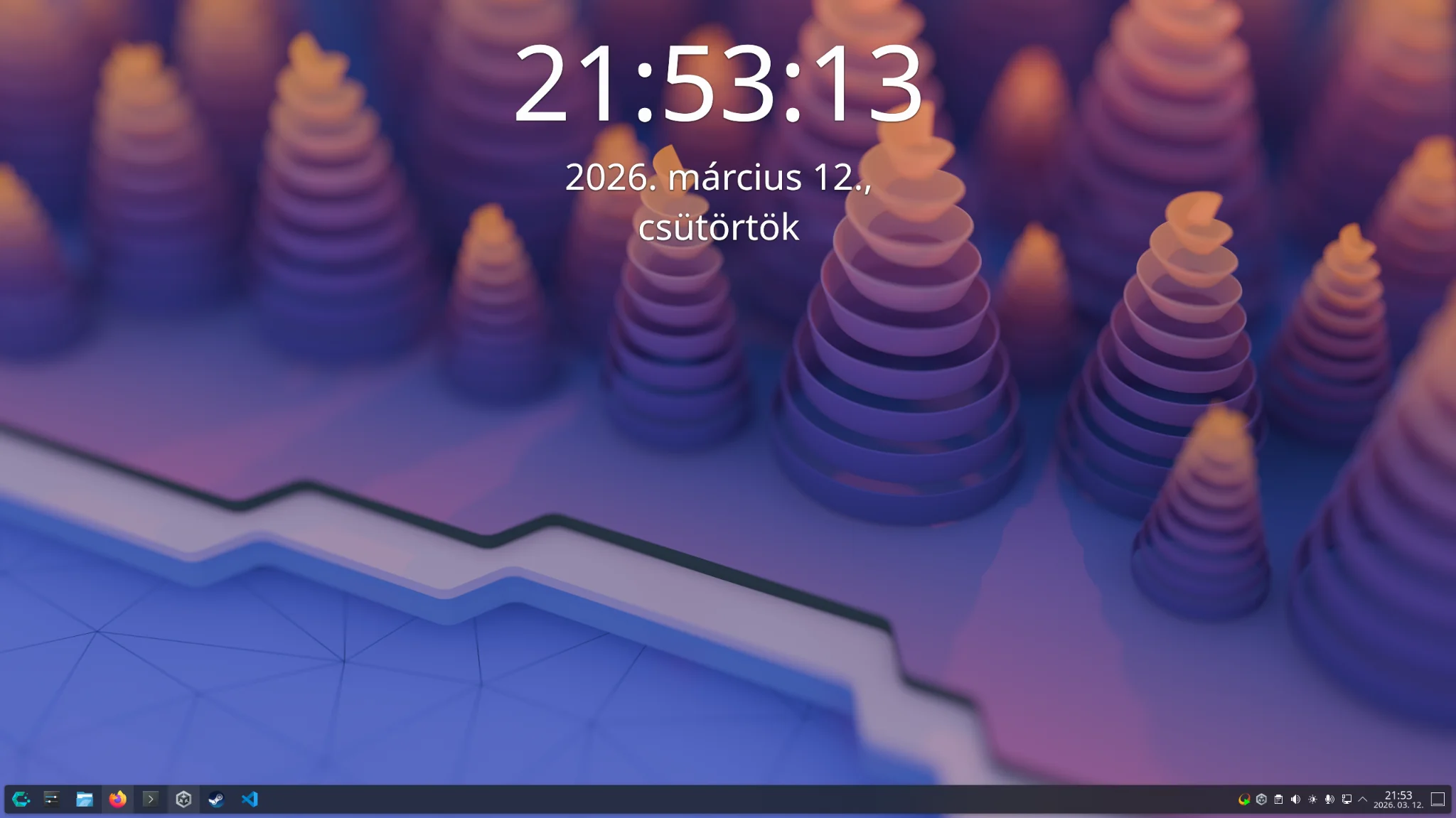
Before diving into the OS hopping, here is the architecture this stack is running on. Optimizing the OS means nothing if you don't understand the metal underneath it.
| Component | Specification |
|---|---|
| CPU | AMD Ryzen 5 5600X (6-Core, 12-Thread) |
| GPU | AMD Radeon RX 6700 XT |
| Memory | 32 GiB (31.2 GiB usable) |
| Environment | KDE Plasma 6.6.2 / Frameworks 6.23.0 / Qt 6.10.2 |
| Display Protocol | Wayland |
| Kernel | 6.19.6-2-cachyos (64-bit) |
The Compromise: The rEFInd Triple-Boot#
I would love to say I wiped the drive completely, but pragmatism had to win. Engineering university requirements mean I am still held hostage by Autodesk Inventor, a notoriously Windows-dependent piece of software. Furthermore, taking a sledgehammer to a drive housing years of undocumented files is a recipe for disaster.
Currently, the system is managed by rEFInd, handling a triple-boot configuration. It isn't the final form, but it provides a safety net. Ironically, I don't even boot into Windows for Rainbow Six Siege anymore; GeForce Now handles that perfectly, proving just how obsolete the local Windows partition is becoming.
Phase 1: Bazzite and the Immutable Ceiling#
The search for a native Linux daily driver initially led to Bazzite. Positioned as the premier hassle-free gaming OS built on an immutable (atomic) Fedora base, it seemed like the perfect plug-and-play solution.
For standard use and gaming, it absolutely lived up to the hype. The containerized approach to package management was an interesting shift:
- Adopt Flatpaks for all GUI applications.
- Utilize Distrobox for CLI tools and development environments.
- Rely on LLM assistance for bridging the Fedora/container knowledge gap.
However, the immutable architecture quickly became a bottleneck for advanced productivity. Engineering pipelines require software that isn't always packaged neatly for atomic systems. I successfully hacked Fusion360 onto Bazzite, but it came at a severe cost. A localized bug emerged when running Unity or Fusion360: opening any new window would lock the entire compositor. The desktop would freeze entirely—sometimes for 2 to 4 seconds, occasionally hanging for minutes.
"Bazzite is an engineering marvel for the living room, but if you need to hack together native CAD and game engines, an immutable filesystem will eventually fight back."
Phase 2: CachyOS and the x86-64-v3 Advantage#
The pivot to CachyOS was entirely impulsive. I saw this specific distro war thread on Reddit, comparing Linux distros. Realizing I had exactly two hours of free time, I decided to benchmark the migration.
I copied over the essential dotfiles and assets from the Bazzite partition, flashed the CachyOS ISO, and initialized the installation. The difference in responsiveness was immediate and violently apparent.
CachyOS compiles its packages using the x86-64-v3 microarchitecture instructions (and v4 where applicable). Because the Ryzen 5 5600X supports these advanced instruction sets (like AVX2), the entire user space executes with significantly lower overhead than standard generic-compiled distributions.
The Arch Reality Check#
Moving from an atomic Fedora base to a bleeding-edge Arch derivative means trading safety for absolute control. It requires a more hands-on administrative approach:
- Package Management: Transitioning muscle memory from
rpm-ostreetopacmanandparu(for the AUR) takes a few days, but the compilation speed viaparuis heavily optimized out of the box. - Kernel Panics & Quirks: Bleeding edge breaks occasionally. Right out of the gate, the Plymouth startup splash screen was causing hard system crashes during the boot sequence. Disabling the graphical boot completely resolved the kernel panic, dropping me back into a reliable, verbose TTY boot sequence.
- The Compositor: Unity and Fusion360 now run flawlessly under Wayland. The window mapping freezes that plagued Bazzite are entirely gone.
Current Optimization Tasks#
While the system's speed is a completely different breed compared to Bazzite, there is still minor tuning required. Currently, I am debugging some slight visual artifacting and glitches with the Sunshine host under the CachyOS kernel.
journalctl --user -u sunshine -f
The migration proves a crucial point for power users: containerization and immutable file systems are the future of consumer electronics, but for development and engineering, unhindered access to the root filesystem on a highly optimized kernel still reigns supreme.